Home / DVA Orange Card Eligibility in Australia: Benefits, RPBS Coverage & How It Works
DVA Orange Card Eligibility in Australia: Benefits, RPBS Coverage & How It Works
April 3, 2026
What Is The NDIS (National Disability Insurance Scheme)?
The National Disability Insurance Scheme (NDIS) is designed to support individuals with disabilities by providing funding for essential services and supports.
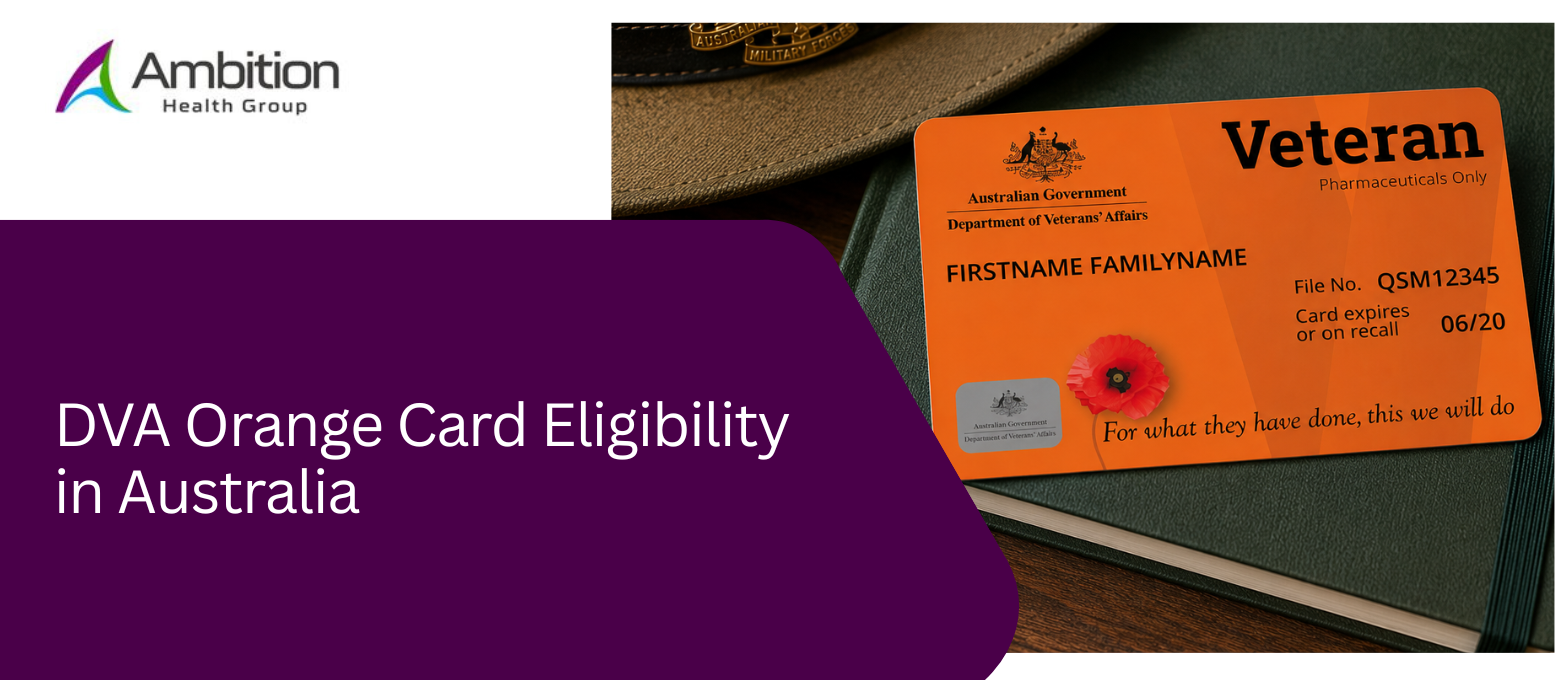
Table of Contents
Already have an existing NDIS plan, the first step is to review it thoroughly
For many Australian veterans and eligible dependants, ongoing prescription costs can be a major healthcare expense. The DVA Orange Card helps reduce medicine costs through access to the Repatriation Pharmaceutical Benefits Scheme (RPBS). Chronic conditions, whether physical injuries carried from service, age-related health issues, or psychological conditions requiring ongoing pharmaceutical management, can demand a regular supply of medications that, without subsidy, would represent a substantial financial burden.
The DVA Orange Card in Australia exists to help eligible cardholders access subsidised medicines and wound care items through the RPBS. While it may be less prominent in public discussion than the Gold or White cards, the Orange Card provides a genuinely important benefit to eligible veterans and dependants through access to the Repatriation Pharmaceutical Benefits Scheme (RPBS). For those who qualify, it can mean significantly reduced costs on the medications they need to manage their health every single day.
At Ambition Health Group, we support veterans and families to understand DVA card entitlements, DVA-funded care options, and how different cards may support healthcare, medication, and in-home support needs. This guide is designed to give you a thorough, clear understanding of the DVA Orange Card: what it is, who qualifies, what the RPBS covers, and how the Orange Card fits into the broader DVA support system.
The Veteran Orange Card provides eligible veterans and dependents with access to the Repatriation Pharmaceutical Benefits Scheme (RPBS), which may include a wider range of medicines and wound care items than the standard PBS, at a concessional co-payment rate. For veterans managing ongoing conditions with regular medications, this can represent significant savings over time.
1. What Is the DVA Orange Card?
The DVA Orange Card is officially known as the Repatriation Pharmaceutical Benefits Card. It is one of three cards issued by the Australian Department of Veterans’ Affairs (DVA) to recognise the service of veterans and provide them with access to government-funded support. The other two cards are the Gold Card and the White Card, both of which provide broader healthcare coverage in addition to pharmaceutical benefits.
The Orange Card is specifically focused on pharmaceutical benefits. It does not provide coverage for medical consultations, hospital treatment, allied health services, or nursing care in the way the Gold and White cards do. Its purpose is to provide access to RPBS medicines, wound care items, and approved pharmaceutical items at concessional rates where eligibility and clinical need apply.
Despite its more focused scope, the Orange Card should not be underestimated. For veterans who are managing chronic health conditions that require regular medications, the savings generated through RPBS access can be substantial. The RPBS covers a wider range of medicines than the standard Pharmaceutical Benefits Scheme (PBS), and the co-payment amounts for RPBS medicines are kept low, making ongoing pharmaceutical management more affordable for eligible cardholders.
The Orange Card is typically issued to veterans and eligible dependents who do not qualify for the broader coverage provided by the Gold or White cards, but who are still recognised as entitled to pharmaceutical support through the DVA system. It ensures that no veteran who has earned a DVA entitlement is left without at least some level of funded healthcare support.
2. DVA Orange Card Eligibility: Who Qualifies?
DVA Orange Card eligibility depends on service history, pension status, dependent status, residency, and DVA assessment rules.
DVA Orange Card eligibility in Australia applies to specific groups of veterans, war widows, war widowers, and eligible dependants who may be entitled to pharmaceutical benefits through DVA. Understanding whether you fall into one of the eligible categories is the first step toward accessing this entitlement.
Veterans Receiving Certain DVA Pensions and Allowances
Veterans who are receiving specific DVA pensions or allowances may be eligible for the Orange Card. Veterans receiving certain DVA pensions or allowances may be eligible for DVA Orange Card benefits, depending on their service history and individual circumstances. This includes veterans who receive a service pension from the DVA, a veterans supplement, or other forms of DVA financial support that do not automatically qualify them for the broader healthcare coverage of the Gold or White cards.
The service pension is a means-tested income support payment available to veterans who have reached the qualifying age and have an eligible service. Veterans receiving the service pension who do not have accepted conditions under the White Card framework, and who do not otherwise qualify for the Gold Card, may be eligible for the Orange Card to ensure they have access to subsidised pharmaceuticals.
War Widows and War Widowers
War widows and war widowers receiving eligible DVA payments may qualify for the Veteran Orange Card or other DVA card entitlements, depending on their circumstances. This provision recognises that the families of veterans who sacrificed their lives or health in service to Australia also deserve ongoing support.
War widows and war widowers who already hold a Gold Card are covered for pharmaceuticals through that card’s broader entitlements and do not need a separate Orange Card. The Orange Card is relevant for those war widows and widowers who receive a DVA pension but do not hold a Gold Card.
Eligible Dependants in Specific Circumstances
Eligible dependents may qualify for DVA pharmaceutical benefits through the Orange Card where DVA eligibility requirements are met.
In certain specific circumstances, eligible dependents of veterans may qualify for the Orange Card. The eligibility criteria for dependents are governed by the relevant DVA legislation and depend on the nature of the veteran’s service, their pension entitlements, and other factors. The DVA can advise whether dependent eligibility applies in your individual circumstances.
Veterans With Accepted Conditions Who Also Receive RPBS Benefits Beyond White Card Coverage
Some veterans who hold a White Card may also be issued an Orange Card to ensure they have access to RPBS medicines beyond those directly tied to their accepted conditions. The interaction between White Card pharmaceutical coverage and the broader RPBS can be complex, and having an Orange Card in addition to a White Card resolves this by giving the holder clear access to the full RPBS medicines list.
Understanding What Does Not Qualify for the Orange Card
It is equally important to understand the situations in which the Orange Card is not the appropriate DVA card. If you have accepted service-related conditions, a DVA White Card may provide treatment and pharmaceutical support for those accepted conditions. If you qualify for broader healthcare coverage, a DVA Gold Card may be more appropriate. If you meet the eligibility criteria for the Gold Card, that card provides comprehensive coverage that includes pharmaceuticals through the RPBS as well as healthcare, making a separate Orange Card unnecessary.
In other words, the Orange Card is designed for veterans and dependants who sit outside the Gold and White card eligibility criteria but who still have a recognised connection to the DVA system through a pension, allowance, or dependant relationship.
If you are unsure whether you are entitled to the Orange Card or whether a Gold or White Card might be more appropriate for your circumstances, speaking directly with the DVA or consulting an experienced provider like Ambition Health Group is always the right first step.
3. What Is the RPBS and How Does It Work?
The Repatriation Pharmaceutical Benefits Scheme (RPBS) helps eligible veterans and dependants access medicines, wound care items, and certain approved pharmaceutical products at concessional rates
To understand the value of the DVA Orange Card, it is essential to understand the Repatriation Pharmaceutical Benefits Scheme (RPBS). The RPBS is a separate pharmaceutical benefits program specifically for eligible veterans, war widows, war widowers, and certain dependents. It operates alongside but is distinct from the standard Pharmaceutical Benefits Scheme (PBS) that most Australians access through Medicare.
How the RPBS Differs From the Standard PBS
The standard PBS provides subsidised access to a defined list of medicines for all Australians. The RPBS may include PBS-listed medicines, RPBS-listed medicines, wound care products, and in some cases non-listed items where there is clinical need and DVA approval. These additional medicines are not available through the standard PBS and are included in the RPBS in recognition of the specific health needs that can arise from military service.
The RPBS also applies reduced co-payment rates compared to the standard PBS. This means that for each medicine dispensed under the RPBS, the out-of-pocket cost to the cardholder is lower. For veterans who require multiple ongoing medications, this reduction in co-payment per script adds up to meaningful savings over the course of a month, a year, and over the long term.
The RPBS Safety Net
Like the standard PBS, the RPBS includes a safety net provision. Once a cardholder reaches the RPBS safety net threshold in a calendar year, meaning they have paid a certain total amount in co-payments, further RPBS medicines are supplied at no cost for the remainder of that year. The RPBS safety net threshold is set at a lower level than the standard PBS safety net, which means Orange Card holders reach the no-cost threshold sooner and benefit from free medicines for a greater portion of the year.
For veterans who require a significant number of medications on an ongoing basis, the RPBS safety net can mean that a substantial proportion of their annual medicine supply is provided at no cost at all.
How to Use Your Orange Card at the Pharmacy
Using the Orange Card at a pharmacy is straightforward. When visiting your doctor, show your Veteran Orange Card so your prescription can be written for RPBS where appropriate. Then show your card again at the pharmacy so the pharmacist can process the medicine under the RPBS. . The pharmacist will process the script through the RPBS rather than the standard PBS, applying the appropriate RPBS co-payment rate. You pay the reduced co-payment amount and receive your medication.
The vast majority of pharmacies across Australia are registered to dispense RPBS medicines, so Orange Card holders can use the card at their regular pharmacy without difficulty. If you are ever uncertain about whether a specific medicine is listed on the RPBS, the pharmacist can advise, or you can check the RPBS formulary through the DVA website.
Medicines Unique to the RPBS
Some medicines and pharmaceutical items may be available through the RPBS medicines list that are not available under the standard PBS . These RPBS-exclusive medicines are included in recognition of specific health conditions that are common among veterans, including conditions related to service exposures, age-related conditions that affect veteran populations, and pharmaceutical treatments that are particularly relevant to the types of injuries and illnesses that military service can cause.
Orange Card holders have access to this extended medicines list, which means they may be able to obtain certain medications at a subsidised rate that would otherwise be available only at full cost through a private prescription.
4. What Does the DVA Orange Card Cover? RPBS Medicines, Wound Care Items and Limits
Being clear about the scope and limitations of the Orange Card is important for managing your healthcare expectations and ensuring you have the right support in place for all your needs.
What the Orange Card Covers
The Orange Card covers access to medicines listed on the RPBS formulary. This includes:
- PBS-listed medicines available through RPBS where prescribed and clinically required
- Additional medicines and wound care items listed through the RPBS formulary S
- Brand substitution or generic options where available and appropriate, subject to pharmacy and prescribing rules
- Medicines required for the ongoing management of chronic conditions, whether physical, neurological, cardiovascular, respiratory, metabolic, or psychological
- Medicines reaching the RPBS safety net threshold, after which further RPBS medicines are dispensed at no cost for the remainder of the calendar year
What the Orange Card Does Not Cover
The DVA Orange Card coverage is limited to pharmaceutical benefits. It does not cover general healthcare, home care, allied health, hospital treatment, or transport services.
It is equally important to understand what the Orange Card does not provide. Unlike the Gold and White cards, the Orange Card does not cover:
- Medical consultations with GPs or specialists
- Hospital treatment or inpatient care
- Allied health services such as physiotherapy, occupational therapy, podiatry, or psychology
- In-home nursing or personal care services
- Dental or optical care
- Transportation to medical appointments
- Community participation or social support programs
For veterans who require support beyond pharmaceutical benefits, it is worth exploring whether you may be eligible for a White Card or Gold Card, which provide broader healthcare coverage in addition to pharmaceutical benefits. Ambition Health Group can help you understand the full range of DVA entitlements that may be available to you.
5. How the Orange Card Fits Into the Broader DVA System
Understanding where the Orange Card sits within the broader DVA card system helps veterans and their families make sense of the entitlements available to them and identify whether additional support might be accessible.
Can You Hold a DVA Orange Card and White Card Together?
As mentioned earlier in this guide, some veterans hold both a White Card and an Orange Card simultaneously. The White Card funds treatment and pharmaceuticals for accepted service-related conditions, while the Orange Card may provide additional pharmaceutical coverage for medicines outside the accepted conditions framework or for dependants who are separately eligible.
If you currently hold a White Card and are unsure whether you are also entitled to an Orange Card, or whether your pharmaceutical needs are fully covered under your existing White Card entitlements, it is worth seeking clarification from the DVA.
Orange Card as a Starting Point
For some veterans and dependants, the DVA Orange Card may be their first connection to DVA pharmaceutical support . Veterans who receive a service pension and are issued an Orange Card may later become eligible for a White Card if they develop or identify service-related conditions that can be formally accepted, or for a Gold Card if their circumstances change to meet those eligibility criteria.
Holding an Orange Card does not prevent you from lodging claims for White Card conditions or from applying for a Gold Card if you believe you meet the eligibility requirements. The DVA system is designed to evolve with your changing health and circumstances.
Orange Card for War Widows and Widowers
For war widows and widowers who receive a DVA pension but do not hold a Gold Card, the Orange Card provides meaningful pharmaceutical support. Managing health conditions in later life often involves multiple ongoing medications, and the RPBS co-payment reductions available through the Orange Card can make a real difference to the day-to-day affordability of staying on top of health management.
War widows and widowers who hold an Orange Card and are uncertain about whether they may be entitled to broader DVA healthcare coverage under a Gold Card or other provisions should contact the DVA to confirm their full entitlements.
6. How to Apply for the DVA Orange Card
The process for accessing or receiving a DVA Orange Card in Australia may be simpler than a White Card conditions claim because it is often linked to pension, service, or dependent eligibility rather than accepted medical conditions. . Because the Orange Card is primarily linked to pension eligibility and dependent status rather than individual condition assessments, the required documentation is more straightforward to gather.
If you are wondering how to apply for a DVA Orange Card, DVA can confirm whether you need to apply or whether the card is issued automatically based on your eligibility.
Step 1: Confirm Your Eligibility
First, confirm your DVA Orange Card eligibility with DVA, as some cards may be issued automatically where eligibility is already established. The most common pathways are receiving a DVA service pension, receiving a war widow’s or war widower’s pension, or being an eligible dependent of a veteran in specific circumstances. If you are unsure, the DVA can confirm your eligibility over the phone or through the MyService portal.
Step 2: Gather Your Documentation
Supporting documentation for an Orange Card application typically includes your DVA client or pension reference number, identification documents confirming your identity and Australian residency, and documentation confirming the basis of your eligibility, such as evidence of pension receipt or proof of your relationship to the veteran in the case of dependants.
Step 3: Lodge Your Application
Orange Card applications can be lodged online through the MyService portal at my.gov.au, by post to the DVA, or in person at a DVA service centre. Many veterans find the online portal the most convenient option, but postal and in-person lodgement remain available for those who prefer them.
Step 4: Receive Your Card and Begin Using It
Once your application is processed and approved, the DVA will issue your Orange Card by post. Processing times are generally relatively quick for Orange Card applications compared to White Card conditions claims, as the assessment is based on established eligibility criteria rather than individual medical determinations.
Once your card arrives, you can begin using it at any registered pharmacy when presenting RPBS prescriptions. Your pharmacist will process the prescription under the RPBS and apply the reduced co-payment rate.
What to Do If Your Application Is Unsuccessful
If your Orange Card application is unsuccessful, you have the right to seek a review of the decision. The DVA’s review process allows veterans and dependants to challenge decisions they believe do not correctly reflect their circumstances. Veterans advocacy organisations can provide assistance with reviews at no cost, and it is always worth pursuing if you believe you meet the eligibility criteria.
7. Practical Tips for Making the Most of Your DVA Orange Card
Holding an Orange Card is one thing. Knowing how to use it effectively to minimise your pharmaceutical costs and ensure you are accessing all the medicines you are entitled to is another. Here are some practical tips for Orange Card holders.
Always Present Your Card at the Pharmacy
It may seem obvious, but many veterans occasionally forget to present their Orange Card at the pharmacy, resulting in them being charged the standard PBS co-payment or even the full private script price. Make it a habit to show your Veteran Orange Card whenever you visit your doctor for a prescription and when you take the prescription to the pharmacy.
Check Whether Your Medicine Is on the RPBS
Not every medicine a veteran takes will necessarily be listed on the RPBS. If your doctor prescribes a new medicine, ask your pharmacist whether it is available through the RPBS formulary and whether any approvals or alternatives may apply. If it is not, your pharmacist may be able to suggest an alternative that is RPBS-listed, or your doctor may be able to prescribe an equivalent medicine that is covered.
Track Your RPBS Safety Net Progress
Keep track of how much you have spent in RPBS co-payments throughout the calendar year. Once you reach the safety net threshold, further RPBS medicines will be supplied at no cost for the remainder of the year. Your pharmacist can tell you how close you are to reaching the threshold, and some pharmacies provide automatic notification when you reach the safety net.
Review Your Entitlements Regularly
Your DVA entitlements are not fixed forever. If your health circumstances change, if you develop new conditions that may be service-related, or if your age or pension status changes, you may become eligible for additional DVA support including a White Card or Gold Card. Reviewing your entitlements with the DVA or with an experienced provider on a regular basis ensures you are always accessing everything you are entitled to.
Speak With Your GP About RPBS-Eligible Alternatives
If you are currently paying full price for any medicines because they are not PBS-listed, it is worth discussing with your GP whether an RPBS-eligible alternative might be clinically appropriate for your condition. Your GP may not always be aware of the full scope of the RPBS formulary, and raising the question directly can open up options you did not know were available.
These tips can help cardholders make the most of DVA Orange Card benefits, reduce medication costs, and track their RPBS Safety Net progress.
How Ambition Health Group Supports DVA Cardholders
At Ambition Health Group, we are committed to supporting Australia’s veterans and their families with the quality of care they have earned through their service. Because the DVA Orange Card is focused on pharmaceutical benefits only, Orange Card holders may need to explore whether other DVA cards, aged care pathways, or government-funded support options are available for broader care needs. .
Veterans and war widows or widowers who hold an Orange Card may also be eligible for other forms of DVA-funded or government-funded community support, and our team can help you explore those options. We help veterans and families understand available DVA card entitlements, including whether they may also be eligible for DVA-funded home care, nursing care, or broader support through a Gold or White Card. .
For Orange Card holders who may also hold a White or Gold Card, or who may be eligible to apply for one, Ambition Health Group delivers the following DVA-funded in-home and community care services:
- In-home nursing care by qualified registered and enrolled nurses, including wound care, medication management, chronic disease monitoring, and post-surgical support
- Personal care assistance with bathing, grooming, dressing, toileting, and mobility support
- Domestic assistance including cleaning, laundry, meal preparation, and grocery shopping
- Transportation to medical appointments and community activities
- Social and community participation support to maintain meaningful connections and reduce isolation
- After hospital care and transition support following discharge
- Overnight and 24 hour care for veterans with complex or high-level support needs
- Palliative and end-of-life care delivered with compassion and dignity
Our care coordinators take the time to understand your individual needs, health conditions, personal goals, and daily routines before designing a care plan that is genuinely built around you. We believe that every veteran deserves care that is as individual as their service, and we bring that belief to every client relationship we build.
If you are an Orange Card holder with questions about your broader DVA entitlements, or if you are looking for in-home support services that may be funded through a Gold or White card you also hold, we encourage you to reach out to our team. We are here to help you understand what you are entitled to and how to access it.
8. Frequently Asked Questions About the DVA Orange Card
Q. Is the DVA Orange Card the same as a healthcare card?
No. The DVA Orange Card is not the same as a general healthcare or concession card. It is a DVA-issued card that provides access to pharmaceutical benefits through the Repatriation Pharmaceutical Benefits Scheme (RPBS). It is specifically issued by the Department of Veterans’ Affairs to eligible veterans and dependants and provides access to the RPBS, which is a separate pharmaceutical benefits scheme from the standard PBS.
Q. Can I hold an Orange Card and a White Card at the same time?
Yes. Some veterans may hold more than one DVA card type, depending on their eligibility and circumstances. The White Card covers treatment and pharmaceuticals for accepted service-related conditions, while the Orange Card may provide additional pharmaceutical coverage in specific circumstances. The DVA will issue the appropriate combination of cards based on your individual eligibility.
Q. What is the difference between the RPBS and the PBS?
The PBS is the standard pharmaceutical benefits scheme available to all Australians through Medicare. The RPBS vs PBS difference is that the RPBS may include PBS medicines, additional RPBS-listed items, wound care products, and sometimes approved non-listed items for eligible DVA cardholders. . RPBS co-payment rates are lower than standard PBS rates, and the RPBS safety net threshold is set at a lower level, meaning cardholders reach free medicines sooner in the calendar year.
Q. How do I find out if my medicine is listed on the RPBS?
Your pharmacist can tell you whether a specific medicine is listed on the RPBS when you present your prescription. Your pharmacist or doctor can check whether your medicine is available through the RPBS medicines list and whether any DVA approval is required. If a medicine you need is not on the RPBS, your GP may be able to prescribe an RPBS-eligible alternative.
Q. Does the Orange Card cover compounded medicines?
Coverage for compounded medicines under the RPBS depends on specific circumstances and the nature of the medicine. In some cases, compounded preparations may be available through the RPBS where no commercially manufactured equivalent is listed. Your pharmacist and GP can advise on whether a compounded medicine you require may be covered.
Q. Can I access the DVA Orange Card anywhere in Australia?
Yes. The DVA Orange Card in Australia is a national entitlement for eligible veterans and dependants, regardless of where they live. Applications can be lodged online through the MyService portal regardless of where you live.
Q. If I have an Orange Card, should I also explore whether I qualify for a White or Gold Card?
Yes. If you have accepted service-related conditions, changing health needs, or broader care requirements, it may be worth exploring whether you qualify for a DVA White Card, DVA Gold Card, or other DVA-funded support. . If you hold an Orange Card and have health conditions you believe may be connected to your military service, it is worth exploring whether you may be eligible for a White Card. If your age, disability rating, or pension status meets Gold Card criteria, that is also worth investigating. Ambition Health Group can help point you in the right direction.
Conclusion
The DVA Orange Card may be the most modest of the three DVA cards in terms of the breadth of services it covers, but for veterans and dependants who rely on ongoing medications to manage their health, its value is concrete and tangible. Access to RPBS medicines, concessional co-payments, wound care items, and the safety net can provide meaningful financial relief for eligible cardholders.
The key is knowing you have it, knowing how to use it, and knowing when to explore whether you might be entitled to more. Australia has a responsibility to its veterans that does not end with the Orange Card, and every veteran deserves to understand the full picture of the support available to them.
At Ambition Health Group, we are proud to support veterans and families by helping them understand DVA card entitlements, DVA-funded care services, and available pathways for in-home and community support. Whether you hold an Orange Card, a White Card, a Gold Card, or a combination of these, our team is here to help you access the services and support that your service has earned you.
Contact Ambition Health Group today to learn more about DVA-funded home care, DVA nursing services, personal care, and support options available to eligible DVA clients.
Call us on 1300 668 655 | Visit ambitionhealthgroup.au/dva
Next Article
Read our latest insights on care, wellbeing, and support services. We share practical advice, updates, and stories that matter to individuals and families.