Home / DVA Gold Card Eligibility in Australia: Benefits, Coverage & How to Apply
DVA Gold Card Eligibility in Australia: Benefits, Coverage & How to Apply
April 22, 2026
What Is The NDIS (National Disability Insurance Scheme)?
The National Disability Insurance Scheme (NDIS) is designed to support individuals with disabilities by providing funding for essential services and supports.
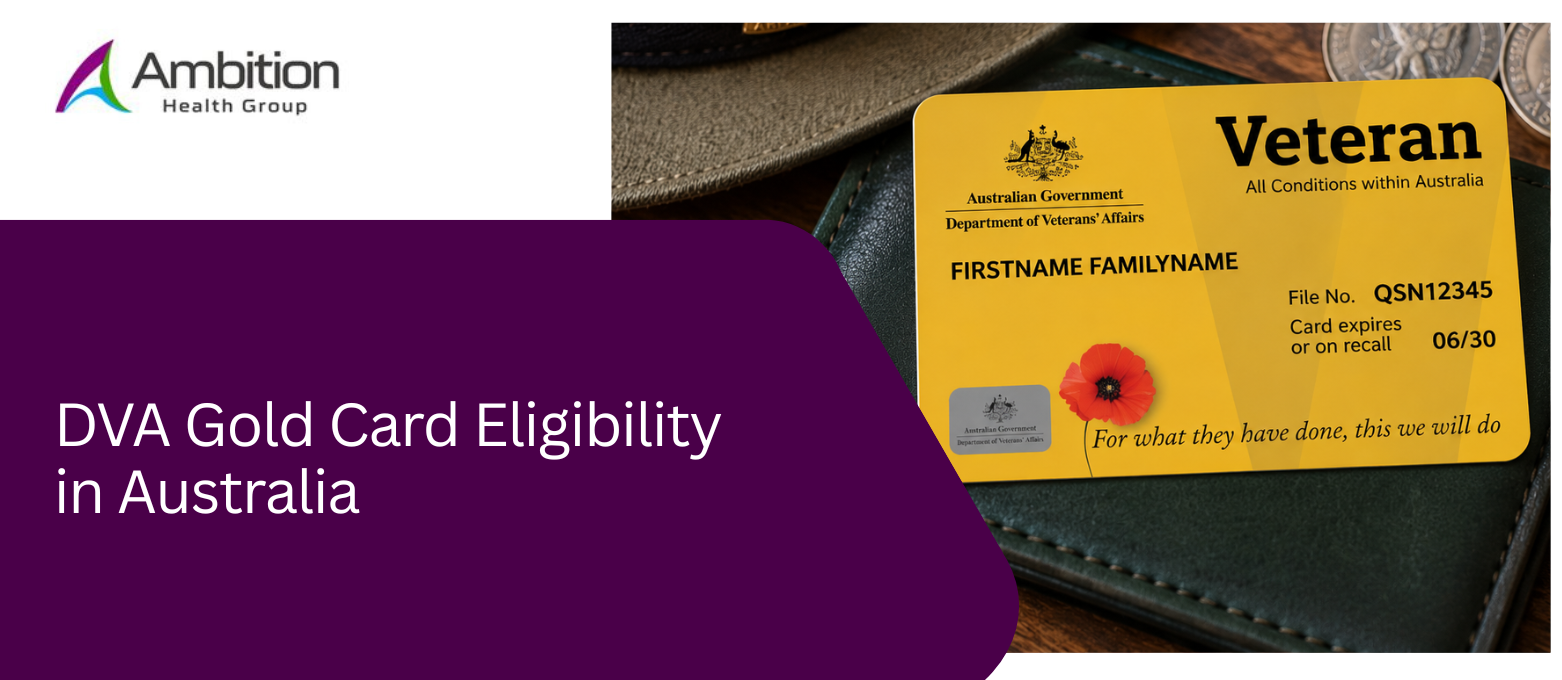
Table of Contents
Already have an existing NDIS plan, the first step is to review it thoroughly
For Australian veterans who have dedicated years of their lives to serving their country, access to quality healthcare and community support is not just a benefit. It is an entitlement that has been hard-earned. The DVA Gold Card is one of the most valuable healthcare entitlements available through the Department of Veterans’ Affairs, giving eligible veterans access to broad DVA-funded healthcare services. Offering holders some of the broadest healthcare coverage available to any group in the country.
Yet despite its importance, many veterans are unsure whether they qualify for the Gold Card, what it actually covers, and how to go about accessing the services it unlocks. At Ambition Health Group, we support DVA Gold Card holders with DVA-funded home care, nursing, personal care, and community support services, and we speak with veterans and their families every day who are navigating these exact questions.
This guide is designed to answer them comprehensively. Whether you are a veteran exploring your entitlements for the first time, a family member helping a loved one, or a support coordinator seeking clear information for your clients, you will find everything you need here.
The DVA Gold Card covers treatment for most health conditions, not only conditions related to military service, subject to DVA rules and provider requirements. For eligible veterans, it is one of the most comprehensive healthcare entitlements available anywhere in Australia.
1. What Is the DVA Gold Card?
The DVA Gold Card is officially known as the Repatriation Health Card for All Conditions. It is issued by the Australian Department of Veterans’ Affairs to eligible veterans, war widows, war widowers, and certain dependents. The card generally entitles eligible holders to funded treatment for a broad range of health conditions, whether or not they are connected to military service.
This is the defining characteristic that sets the Gold Card apart from the other two DVA card types. The DVA White Card covers only accepted service-related conditions, and the DVA Orange Card is limited to pharmaceutical benefits. The Gold Card removes those restrictions entirely, providing a level of healthcare coverage that reflects the depth of sacrifice made by those who qualify for it.
Gold Card holders can access care through a wide network of DVA-approved providers, including general practitioners, medical specialists, hospitals, allied health professionals, community nursing services, and in-home care providers like Ambition Health Group. The DVA funds the cost of this care directly, meaning eligible veterans do not need to rely on private health insurance or pay significant out-of-pocket expenses for their healthcare needs.
Understanding the DVA Gold Card in Australia is important for veterans, war widows, war widowers, and eligible dependents who want to access healthcare, nursing, allied health, and home care support.
2. DVA Gold Card Eligibility: Who Qualifies?
DVA Gold Card eligibility depends on service history, age, accepted disability status, pension entitlements, and specific DVA assessment criteria.
Gold Card eligibility is governed by the Veterans Entitlements Act 1986 and related legislation. The criteria are specific, but they cover a meaningful range of veterans and eligible dependents. Below is a general guide to who may qualify for a DVA Gold Card in Australia. Eligibility can vary, so veterans should confirm their circumstances directly with DVA.
Veterans With Qualifying Service and Age
One of the most common pathways to Gold Card eligibility is through a combination of qualifying service and age. Veterans who have completed qualifying service and reached age 70 may be eligible for the DVA Gold Card, depending on the specific service criteria set by DVA. The type of service that qualifies, whether warlike, non-warlike, or peacetime, affects the applicable criteria, and some service categories require a higher level of recognised disability before the age threshold applies.
Veterans With Total and Permanent Incapacity
Veterans assessed with total and permanent incapacity may qualify for DVA Gold Card benefits, including funded healthcare, nursing, and support services
Veterans who have been assessed as having a total and permanent incapacity (T&PI) that is accepted by the DVA as being caused or aggravated by their military service are eligible for the Gold Card. This category typically applies to veterans whose service-related disabilities are so significant that they are unable to work or perform the activities of daily life without substantial ongoing support.
Veterans Receiving a Special Rate Disability Pension
Veterans who receive the Special Rate Disability Pension, commonly referred to as the T&PI pension, under the Veterans Entitlements Act 1986 are entitled to the Gold Card. This pension is reserved for veterans whose service-related incapacity prevents them from undertaking regular employment, and receiving it is a direct pathway to Gold Card eligibility.
Veterans Receiving an Extreme Disablement Adjustment
Veterans assessed as receiving an Extreme Disablement Adjustment (EDA) under the Veterans Entitlements Act are also eligible for the Gold Card. The EDA is payable to veterans who are over the age of 65 and have an accepted disability rated at 100 per cent or more under the DVA pension assessment framework.
Former Prisoners of War
All former prisoners of war who served in the Australian Defence Force are eligible for the Gold Card. The Australian Government recognises the extraordinary and prolonged suffering endured by POWs and ensures they have access to the fullest level of healthcare support available under the DVA system.
War Widows and War Widowers
The surviving spouses of veterans who held or were eligible to hold a Gold Card may themselves be entitled to the Gold Card. War widows and war widowers are a recognised group under the DVA system, and their entitlements reflect the sacrifices made not just by the veteran but by their family as a whole.
Other Eligible Groups
There are additional categories of eligibility that apply in specific circumstances, including certain dependents of veterans and individuals covered under specific compensation acts. If you are unsure whether your personal circumstances qualify you for the Gold Card, contacting the DVA directly or speaking with an experienced provider is the recommended course of action.
Even if you have previously been assessed as ineligible for the Gold Card, it is worth reviewing your eligibility periodically. Changes in your accepted conditions, disability rating, or pension entitlements may open new pathways to Gold Card eligibility over time.
3. What Does the DVA Gold Card Cover?
The DVA Gold Card coverage is broad and may include medical care, hospital treatment, allied health, mental health support, pharmaceuticals, transport, and approved in-home care. Because the Gold Card covers all health conditions and not just those accepted as service-related, it can provide a high level of healthcare support, but it should not be described as private health insurance because it operates under DVA rules and approved provider arrangements. The following sections outline the key areas of coverage available to Gold Card holders.
General Medical Care
This is one of the key DVA Gold Card benefits for veterans managing ongoing or age-related health needs.
Gold Card holders can access consultations with general practitioners (GPs) for any health condition. The DVA funds the gap between the Medicare rebate and the full cost of the appointment, meaning veterans can see their GP without worrying about out-of-pocket expenses. This extends to ongoing management of chronic conditions, preventive healthcare, medication reviews, and general health monitoring.
Specialist Medical Treatment
Referrals to medical specialists are fully funded through the Gold Card, regardless of the specialty or the condition being treated. Whether a veteran requires a cardiologist, an oncologist, an orthopaedic surgeon, a neurologist, or any other specialist, those appointments and the associated treatments are covered. This is particularly valuable for veterans managing complex or chronic health conditions that require ongoing specialist oversight.
Hospital Care
Gold Card holders have access to hospital treatment as a private patient at both public and private hospitals recognised by the DVA. This includes inpatient admissions, surgical procedures, diagnostic testing conducted during hospital stays, and associated nursing and allied health care. Accessing treatment as a private patient generally means shorter waiting times and a greater choice of treating physicians.
In-Home Nursing and Personal Care
One of the most important categories of Gold Card coverage for many veterans is in-home care. This includes community nursing services delivered by registered and enrolled nurses, personal care assistance with daily living activities such as bathing, grooming, dressing, and meal preparation, and domestic assistance such as cleaning, laundry, and home maintenance.
These services are particularly valuable for veterans who wish to remain living at home as they age or manage health conditions, rather than transitioning to residential care. Ambition Health Group provides DVA-funded in-home nursing care, personal care, domestic assistance, and support services for eligible Gold Card holders.
Mental Health Services
Mental health support is a critical area of coverage under the Gold Card. Veterans can access psychological counselling, psychiatric treatment, and other mental health services for any condition, not only those formally accepted as service-related. This includes treatment for post-traumatic stress disorder, depression, anxiety, substance use issues, and other conditions that may have their roots in military service or have developed independently.
The DVA also funds the Veterans and Veterans Families Counselling Service (VVCS), which provides free and confidential counselling to veterans and their families. Gold Card holders can access VVCS services in addition to the broader mental health coverage the card provides.
Allied Health Services
DVA Funded Allied health services play a vital role in the care of many veterans, and the Gold Card provides comprehensive coverage in this area. This includes:
- Physiotherapy for musculoskeletal injuries, mobility issues, post-surgical rehabilitation, and chronic pain management
- Occupational therapy for home assessments, assistive equipment, and daily living support
- Podiatry for foot care, wound management, and diabetic foot health
- Speech pathology for communication and swallowing difficulties
- Dietetics and nutritional support
- Exercise physiology and rehabilitation
- Optometry and optical services, including prescription glasses
- Dental care, including general and preventive dental treatment
Pharmaceuticals Through the RPBS
Gold Card holders may access subsidised medicines through the Repatriation Pharmaceutical Benefits Scheme (RPBS), which includes PBS medicines and additional items available under the repatriation scheme.
The RPBS covers all medicines listed under the standard Pharmaceutical Benefits Scheme (PBS), plus a range of additional medicines available only through the repatriation scheme. Co-payment amounts are significantly reduced, making ongoing medications substantially more affordable.
Transportation to Medical Appointments
The DVA funds transportation to and from medical appointments for Gold Card holders who have difficulty travelling independently due to their health conditions. This includes both private transport arrangements and the DVA’s community transport programs, ensuring veterans can attend the appointments they need without transportation being a barrier to care.
Palliative and End-of-Life Care
For veterans requiring palliative care, the Gold Card funds a range of end-of-life services, including in-home palliative nursing, pain management, symptom control, and support for family members and carers. Access to quality palliative care at home is one of the most valued aspects of the Gold Card for veterans in the later stages of a terminal illness.
Gold Card coverage extends to services you may not expect, including dental care, optical services, and home modifications to support independent living. If you are unsure whether a specific service is covered, contacting the DVA or an experienced provider like Ambition Health Group is always the right first step.
4. What Services Does the DVA White Card Cover?
If you are wondering how to apply for a DVA Gold Card, the process usually involves confirming your eligibility pathway, gathering documents, and submitting an application through DVA or MyService.
Applying for the DVA Gold Card involves submitting the appropriate documentation to the Department of Veterans’ Affairs and demonstrating that you meet the eligibility criteria. While the process requires some preparation, taking it step by step makes it far more manageable.
Step 1: Understand Your Eligibility Pathway
Before you begin your application, it is important to identify which eligibility pathway applies to you. Are you applying based on age and qualifying service? Are you applying because of a total and permanent incapacity? Are you a war widow or widower? Identifying your eligibility pathway will determine what documentation you need and which application form is relevant to your circumstances.
Step 2: Gather Your Supporting Documentation
Supporting documentation typically includes your service records or proof of Australian Defence Force service, any existing DVA file or reference number, medical evidence supporting your disability or health condition where relevant, identification documents, and any prior DVA determinations relating to accepted conditions or pension entitlements.
Step 3: Complete Your Application
DVA applications can be submitted online through the MyService portal at my.gov.au, by post to the DVA, or in person at a DVA service centre. If you are applying online, you will need a myGov account linked to your DVA record. Ensure all sections of the form are completed accurately and that you attach all required supporting documents before submitting.
Step 4: Await the DVA Assessment
Once your application has been received, the DVA will assess it against the relevant eligibility criteria. You may be contacted for additional information during the assessment process. Processing times vary depending on the complexity of the application and current DVA workload, but the DVA will notify you of the outcome in writing.
Step 5: Begin Accessing Your Entitlements
Once your Gold Card is issued, you can begin accessing your entitlements immediately through DVA-approved providers. Ambition Health Group can help you get started with in-home nursing and personal care services as soon as your card is active.
What If Your Application Is Rejected?
A rejected application is not necessarily the end of the road. You have the right to request a review of the DVA’s decision, and many veterans who initially receive an unfavourable outcome are ultimately successful on review. Veterans advocacy organisations, including the Returned Services League (RSL) and other ex-service organisations, can provide free assistance with review applications.
5. Maximising Your DVA Gold Card Benefits and Entitlements
Holding a Gold Card is one thing. Knowing how to make the most of it is another. Many veterans hold Gold Cards but are unaware of the full scope of services they are entitled to access. Here are some practical ways to ensure you are getting the full benefit of your Gold Card.
Review Your Care Needs Regularly
Your health needs will change over time, and your care plan should change with them. If you have been managing with a basic level of in-home support but your needs have increased, you may be entitled to additional services under your Gold Card. Regular reviews with your GP and care provider ensure that your support remains appropriately matched to your needs.
Know Your Allied Health Entitlements
Many Gold Card holders are unaware of the full breadth of DVA-Funded allied health services available to them. If you have not yet explored physiotherapy, occupational therapy, podiatry, or other allied health services, it is worth discussing these options with your GP or care coordinator. Addressing issues early through allied health often prevents more serious health problems from developing later.
Access Mental Health Support Proactively
Mental health remains one of the most underdiscussed areas of veteran healthcare. The Gold Card provides full mental health coverage for any condition, and accessing support early rather than waiting for a crisis is always the better approach. Your GP can provide a referral to a psychologist or psychiatrist, and the VVCS provides confidential counselling specifically designed for veterans.
Use a DVA-Experienced Provider
Choosing a care provider who is experienced with DVA-funded clients makes a significant practical difference. Experienced providers understand how to process DVA claims correctly, know which services are covered, and can advocate on your behalf if questions arise about your entitlements. Ambition Health Group has extensive experience supporting DVA Gold Card holders and can help you navigate your entitlements with confidence.
6. How Ambition Health Group Supports DVA Gold Card Holders
At Ambition Health Group, supporting Australia’s veterans is something we take seriously and are deeply proud of. Our team understands the sacrifices veterans have made, and we are committed to ensuring that every DVA Gold Card holder in our care receives services that reflect their dignity, respect their independence, and genuinely improve their quality of life.
We deliver a comprehensive range of DVA-funded home care services, nursing care, personal care, domestic assistance, transport support, and community-based care for eligible Gold Card holders, including:
- In-home nursing care by qualified registered and enrolled nurses, including wound care, medication management, chronic disease monitoring, and post-surgical support
- Personal care assistance with bathing, grooming, dressing, toileting, and mobility
- Domestic assistance, including cleaning, laundry, grocery shopping, and meal preparation
- Transportation to medical appointments and community activities
- Social and community participation support to maintain connections and reduce isolation
- After hospital care and transition support following discharge from hospital
- Allied health coordination, including physiotherapy and occupational therapy
- 24-hour and overnight care for veterans with complex or high-level support needs
- Palliative care at home delivered with compassion and professionalism
Our care coordinators take the time to understand your personal goals, health conditions, daily routines, and preferences before building a care plan that is genuinely tailored to you. We do not believe in one-size-fits-all care, and we work hard to ensure that the support you receive is flexible, responsive, and centred entirely on your needs.
We also understand that many veterans are navigating the DVA system while managing health challenges, family responsibilities, or the natural complexities of ageing. Our team is always happy to answer your questions, explain your entitlements clearly, and help you access the full range of services your Gold Card provides.
7. Frequently Asked Questions About the DVA Gold Card
Q. Does the DVA Gold Card cover dental and optical care?
Yes. DVA Gold Card coverage may include dental and optical services for eligible holders, including general dental treatment, preventive care, and prescription glasses.. Coverage details may vary depending on your circumstances, so it is always worth confirming specific entitlements with the DVA or your provider.
Q. Can I use the Gold Card at any doctor or hospital?
The Gold Card can generally be used with DVA-approved healthcare providers, including many GPs, specialists, hospitals, allied health professionals, and community care providers. Most GPs, specialists, and hospitals in Australia are recognised by the DVA, but it is always good practice to confirm that your chosen provider accepts DVA-funded patients before your appointment.
Q. What is the difference between the DVA Gold Card and private health insurance?
The Gold Card is a government-funded entitlement specific to eligible veterans. Unlike private health insurance, there are no premiums to pay and no excess charges for covered services. The Gold Card also covers a broader range of services than most private health insurance policies.
Q. Can the Gold Card be used for in-home care services?
Yes. Eligible Gold Card holders may access DVA-funded in-home care services, including nursing, personal care, domestic assistance, and support after hospital discharge.
Q. What happens to my Gold Card if I enter residential aged care?
If you enter a residential aged care facility, your Gold Card entitlements continue to apply for healthcare services. However, the funding arrangements for residential care itself are separate from the Gold Card. The DVA and aged care system interact in specific ways, and it is worth seeking advice tailored to your circumstances.
Q. Is there a cost to apply for the Gold Card?
No. There is no application fee for the DVA Gold Card. If you believe you are eligible, you should apply through the DVA without any concern about cost.
Conclusion
The DVA Gold Card in Australia represents one of the most important healthcare entitlements available to eligible veterans, war widows, war widowers, and dependants. . For those who qualify, it opens the door to comprehensive healthcare, in-home nursing support, allied health services, pharmaceutical benefits, and much more, all funded in recognition of the service and sacrifice that earned that entitlement.
If you are a veteran exploring your Gold Card eligibility, or if you already hold a Gold Card and want to make the most of the services available to you, Ambition Health Group is here to help. Our team is experienced, compassionate, and genuinely committed to supporting Australia’s veterans with the quality of care they deserve.
Contact Ambition Health Group today to learn more about DVA-funded home care, DVA nursing services, personal care, and support services available to eligible Gold Card holders.
Call us on 1300 668 655 | Visit ambitionhealthgroup.au/dva
Next Article
Read our latest insights on care, wellbeing, and support services. We share practical advice, updates, and stories that matter to individuals and families.