Home / DVA White Card Explained: Eligibility, Benefits, and Coverage
DVA White Card Explained: Eligibility, Benefits, and Coverage
April 12, 2026
What Is The NDIS (National Disability Insurance Scheme)?
The National Disability Insurance Scheme (NDIS) is designed to support individuals with disabilities by providing funding for essential services and supports.
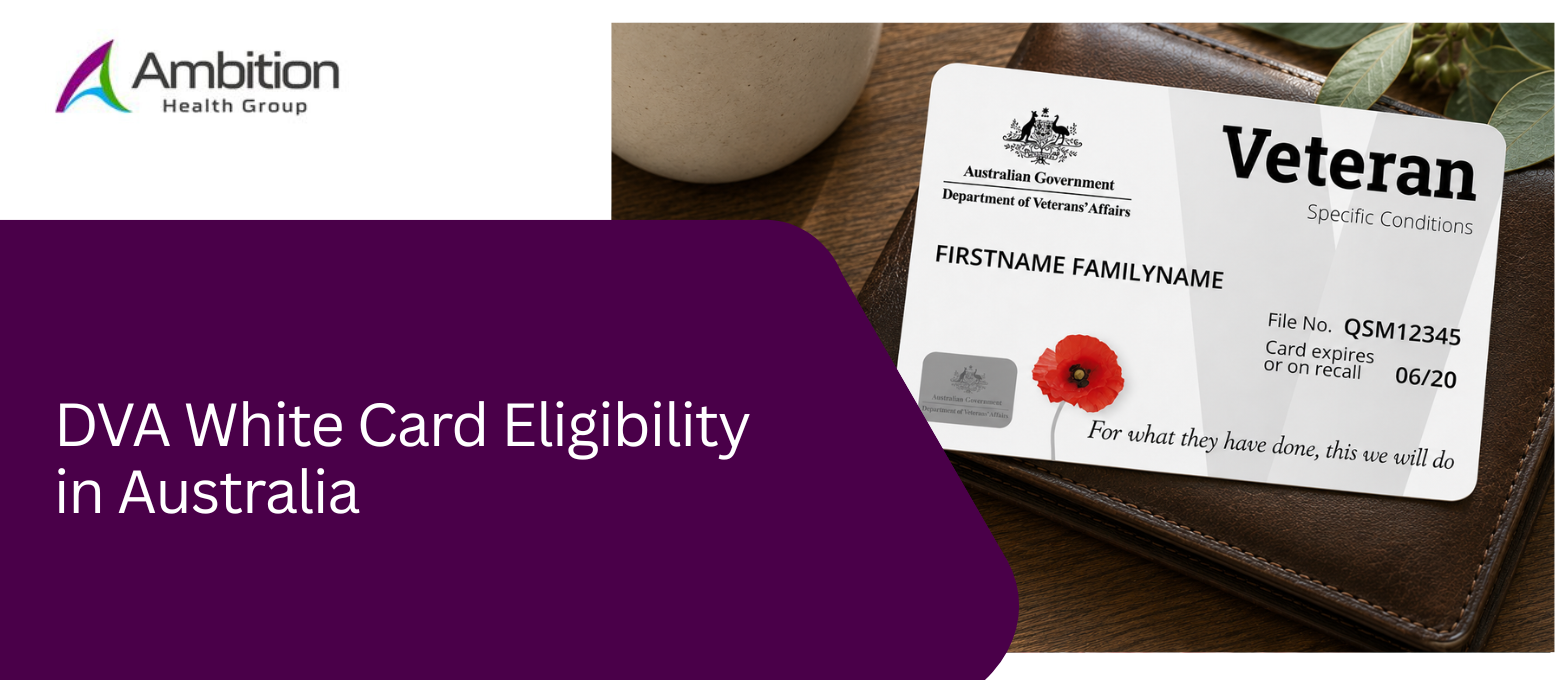
Table of Contents
Already have an existing NDIS plan, the first step is to review it thoroughly
Military service places unique demands on the body and mind. From physical injuries sustained during training or deployment, to the psychological weight of witnessing conflict or operating in high-stress environments, the health impacts of serving in the Australian Defence Force can be profound and long-lasting. The DVA White Card helps eligible veterans access funded treatment and healthcare support for accepted service-related conditions.
While the DVA Gold Card provides broader healthcare coverage, the DVA White Card in Australia takes a more targeted approach by covering accepted service-related conditions and, for eligible veterans, certain non-liability healthcare treatments. It is specifically designed to provide DVA-funded healthcare for conditions accepted by the Department of Veterans’ Affairs as related to military service. For many veterans, particularly those who served in peacetime or who do not yet qualify for the broader Gold Card, the White Card is the primary gateway to DVA-funded healthcare.
At Ambition Health Group, we support DVA White Card holders with DVA-funded nursing care, personal care, domestic assistance, transport support, and community care services. We understand how important it is for veterans to know exactly what their White Card covers, how to navigate the accepted conditions process, and how to access the services they are entitled to. This guide provides a thorough, practical answer to all those questions.
The Veteran White Card is one of the most commonly accessed DVA healthcare entitlements for Australian veterans with accepted conditions or eligible service history. It covers healthcare costs for accepted service-related conditions and includes an important mental health provision that allows veterans to access treatment before a formal condition determination is made.
1. What Is the DVA White Card?
The DVA White Card, also known as the Repatriation Health Card for Specific Conditions, is issued to eligible veterans and, in some cases, eligible dependents. It is issued by the Australian Department of Veterans’ Affairs to eligible veterans and, in certain circumstances, to eligible dependents. Unlike the Gold Card, which covers all health conditions, the White Card is condition-specific. It funds treatment only for health conditions that have been formally accepted by the DVA as being connected to a veteran’s military service.
Each accepted condition is individually listed on or associated with the card. When a veteran receives treatment for an accepted condition, the DVA funds the cost of that treatment through the White Card. Treatment for conditions that have not been accepted is not covered under the White Card, though veterans may be able to access other funding streams, such as Medicare, for those conditions.
There are important exceptions to the condition-specific rule, including access to DVA non-liability health care for eligible veterans. Eligible veterans may access DVA mental health treatment through non-liability healthcare without needing to prove their ADF service caused the mental health condition. This provision recognises the significant mental health burden that military service can create and ensures veterans are not delayed in accessing the psychological support they need.
The White Card is the most commonly held DVA card in Australia and represents the starting point for most veterans entering the DVA healthcare system. Understanding how it works and how to maximise its benefits is essential for every veteran who holds one.
2. DVA White Card Eligibility: Who Can Apply?
DVA White Card eligibility depends on service history, accepted service-related conditions, applicable legislation, and whether a veteran qualifies for non-liability healthcare.
DVA White Card eligibility in Australia is generally broader than Gold Card eligibility, making it accessible to many current and former ADF members, including reservists in some circumstances. The key requirement is that you have served in the Australian Defence Force and have one or more health conditions that are formally accepted, or can be accepted, as being caused or aggravated by that service.
Veterans With Accepted Service-Related Conditions
The core eligibility group for the White Card is veterans who have one or more health conditions formally accepted by the DVA as being caused or aggravated by their military service. This includes physical conditions such as musculoskeletal injuries, hearing loss, respiratory conditions, and chronic pain, as well as psychological conditions such as post-traumatic stress disorder, anxiety, depression, and adjustment disorder.
The acceptance process involves lodging a claim with the DVA and providing supporting medical evidence that establishes the connection between your condition and your service. Once a condition is accepted, the White Card will fund treatment for that condition going forward.
Veterans Covered Under the MRCA or DRCA
Veterans covered under MRCA or DRCA may be eligible for DVA White Card benefits where they have accepted service-related injuries, illnesses, or conditions.
Veterans whose service is covered under the Military Rehabilitation and Compensation Act 2004 (MRCA) or the Safety, Rehabilitation and Compensation (Defence-related Claims) Act 1988 (DRCA) may also be eligible for a White Card if they have accepted conditions under those legislative frameworks. These acts cover different service periods and circumstances than the Veterans Entitlements Act 1986, and the eligibility rules differ accordingly.
If you are unsure which legislation applies to your service, the DVA can advise based on the dates and nature of your service history. Ambition Health Group can also help point you in the right direction.
Veterans Accessing Mental Health Treatment
One of the most significant eligibility provisions associated with the White Card is the mental health access rule. Eligible veterans may access DVA mental health support through the White Card under non-liability healthcare, without needing to prove the mental health condition was caused by ADF service.
This means that a veteran who served in a conflict zone and is experiencing symptoms of post-traumatic stress, depression, or anxiety can begin accessing funded mental health treatment immediately, without waiting for the DVA claims assessment process to be completed. This provision has been enormously important in improving mental health outcomes for veterans who may otherwise delay seeking help while waiting for a formal determination.
Eligible Dependants
In certain circumstances, eligible dependants of veterans may also be entitled to White Card benefits. The specific eligibility criteria for dependants are governed by the relevant legislation and depend on the veteran’s service history and the nature of their accepted conditions. The DVA can advise on whether dependant entitlements apply in your circumstances.
Veterans Who Do Not Yet Qualify for the Gold Card
Many veterans who will eventually qualify for the Gold Card begin their DVA healthcare journey with a White Card. If your circumstances change, for example, if your disability rating increases, you begin receiving a qualifying pension, or you reach the relevant age threshold, you may become eligible for an upgraded Gold Card in the future. Holding a White Card now does not prevent you from applying for a Gold Card later.
If you have served in the Australian Defence Force and believe you have health conditions connected to that service, it is always worth lodging a White Card application and a conditions claim with the DVA. There is no cost to apply, and the potential benefit of having your conditions accepted and funded is significant.
3. What Conditions Does the DVA White Card Cover?
DVA White Card coverage generally applies to accepted service-related injuries, illnesses, or conditions, as well as certain non-liability healthcare treatments where eligibility applies. The range of conditions that can be accepted is extensive and covers both physical and psychological health.
Physical Health Conditions
Military service is physically demanding, and many veterans carry lasting physical health conditions as a result of their time in uniform. Common physical conditions accepted by the DVA include:
- Musculoskeletal injuries, including back injuries, knee injuries, shoulder injuries, and joint disorders, are caused by the physical demands of service or specific incidents during service
- Hearing loss and tinnitus, which are among the most frequently accepted conditions, are given the high levels of noise exposure experienced by many serving members
- Respiratory conditions, including those caused by exposure to hazardous substances, chemicals, or environmental factors during service
- Skin conditions resulting from exposure to chemicals, UV radiation, or environmental factors encountered during deployment
- Cardiovascular conditions where a connection to service-related stress, physical exertion, or exposure is established
- Neurological conditions, including those resulting from injuries sustained during service
- Chronic pain conditions that can be traced to service-related injuries or exposures
- Vision impairment related to service-related injuries or exposures
Understanding DVA accepted conditions is important because White Card treatment is usually linked to the conditions recorded against your DVA file or listed in MyService.
This list is not exhaustive. The DVA assesses each condition claim individually based on the available medical evidence and the applicable legislative framework. Veterans are encouraged to lodge claims for any condition they believe may be connected to their service, even if they are uncertain about the outcome.
Psychological and Mental Health Conditions
Mental health conditions are a significant and growing area of White Card coverage. The psychological demands of military service, including exposure to traumatic events, operational stress, moral injury, and the challenges of transitioning back to civilian life, can give rise to a range of mental health conditions that may qualify for acceptance under the White Card.
Mental health conditions that may be covered under DVA White Card mental health support include:
- Post-traumatic stress disorder (PTSD), which is one of the most frequently accepted psychological conditions among veterans who have served in warlike environments
- Depression and depressive disorders, where a connection to service-related experiences or stressors can be established
- Anxiety disorders, including generalised anxiety, panic disorder, and social anxiety
- Adjustment disorder related to the challenges of transitioning out of military service or adapting to post-deployment life
- Alcohol use disorder and substance use disorders, where a connection to service-related trauma or stress is established
- Sleep disorders, including chronic insomnia connected to service-related stress or PTSD
As noted earlier, eligible veterans may access treatment for any mental health condition through DVA non-liability health care, even when the condition has not been formally accepted as service-related. This open mental health access provision is a vital safety net that ensures veterans can get help when they need it most.
Conditions Related to Specific Deployments or Exposures
Some veterans may have conditions connected to specific deployments, environments, or exposures encountered during their service. This includes conditions related to Agent Orange exposure for Vietnam veterans, conditions connected to nuclear testing programs, and health issues arising from service in specific theatres of operation where known hazards were present.
The DVA has established specific processes for assessing claims related to known service hazards, and veterans with conditions they believe are connected to a specific deployment or exposure are encouraged to seek advice on how best to lodge their claim.
4. What Services Does the DVA White Card Cover?
For each accepted condition, the White Card funds a comprehensive range of treatment and support services. The scope of services available reflects the DVA’s commitment to ensuring veterans receive appropriate and ongoing care for their service-related health conditions.
Medical Consultations and Treatment
White Card holders can access GP consultations and specialist appointments for their accepted conditions without out-of-pocket cost. This includes ongoing management of chronic accepted conditions, diagnostic investigations, and referrals to specialists whose expertise is relevant to the accepted condition. These services form part of DVA-funded healthcare services for accepted conditions.
Hospital Treatment
Inpatient and outpatient hospital treatment for accepted conditions is funded through the White Card. Veterans can access care as a private patient at recognised hospitals, which generally means shorter wait times and greater choice of treating physicians for accepted conditions.
Allied Health Services
A range of allied health services are available under the White Card for accepted conditions, including:
- Physiotherapy for musculoskeletal conditions, rehabilitation following injury, and chronic pain management
- Occupational therapy for functional assessments, adaptive equipment, and support with daily living activities connected to accepted conditions
- Psychology and counselling for accepted mental health conditions
- Podiatry for foot and lower limb conditions connected to accepted diagnoses
- Speech pathology where clinically connected to an accepted condition
- Exercise physiology and rehabilitation for accepted physical conditions
- Dietetics and nutritional support where clinically connected to an accepted condition
Mental Health Services
Mental health treatment is available through the White Card on two distinct bases. For veterans with formally accepted mental health conditions, treatment is funded as for any other accepted condition. For veterans with warlike service, mental health treatment is available for any mental health condition under the open access provision, regardless of whether a formal acceptance determination has been made.
Mental health services available include psychology consultations, psychiatry, group therapy programs, and access to the Veterans and Veterans Families Counselling Service (VVCS), which provides free and confidential counselling to veterans and their families across Australia.
In-Home Nursing and Personal Care
Where an accepted condition requires in-home support, the White Card may fund DVA-funded in-home nursing care and personal care assistance. This is particularly relevant for veterans managing complex wounds, post-surgical recovery, chronic disease management, or disability arising from a service-related condition.
Ambition Health Group provides DVA-funded nursing care, personal care, and community support services for eligible White Card holders. Our nurses and care workers are experienced in supporting veterans with a wide range of service-related conditions.
Pharmaceuticals Through the RPBS
White Card holders can access medications for their accepted conditions through the Repatriation Pharmaceutical Benefits Scheme (RPBS). The RPBS covers all PBS-listed medicines plus additional medicines available only through the repatriation scheme, with significantly reduced co-payment amounts for eligible cardholders.
Transportation to Medical Appointments
Where a veteran has difficulty travelling independently due to an accepted condition, the DVA may fund transportation to and from medical appointments. This ensures that access to care is not compromised by mobility limitations or lack of transport options.
5. How to Lodge a DVA White Card Application and Conditions Claim
Applying for a DVA White Card in Australia may involve applying for the card and lodging a claim to have specific health conditions accepted by DVA. The first is applying for the White Card itself, and the second is lodging a claim to have your specific health conditions accepted by the DVA. Both processes are handled by the Department of Veterans’ Affairs and can be completed through the same application pathway.
If you are wondering how to apply for a DVA White Card, the process usually involves confirming your service history, gathering medical evidence, lodging a claim, and waiting for DVA’s decision.
Step 1: Identify Your Service History and Relevant Conditions
Before lodging your application, take stock of your service history, including the dates, locations, and nature of your service, and identify the health conditions you believe are connected to that service. Having a clear picture of both your service and your health will help you complete your application accurately and comprehensively.
Step 2: Gather Medical Evidence
Strong medical evidence is the foundation of a successful DVA conditions claim. You will need medical records and reports that document your condition and, where possible, establish a connection between your condition and your service. Your GP or treating specialist can assist with preparing supporting documentation. The more thorough and specific the medical evidence, the stronger your claim will be.
Step 3: Gather Your Service Records
Your service records are essential documentation for a White Card application. These can be obtained through the Department of Defence if you do not already have copies. Your records should confirm the nature, dates, and locations of your service, which is critical information for establishing service connection for your conditions.
Step 4: Lodge Your Application
White Card applications and conditions claims can be lodged online through the MyService portal at my.gov.au, by post, or in person at a DVA service centre. When lodging online, you will need a myGov account linked to your DVA record. Complete all sections of the application carefully and attach all supporting documentation before submitting.
Step 5: Engage With the DVA Assessment Process
Once your application is received, the DVA will assess your claim against the applicable legislative framework and the available evidence. You may be asked to provide additional information or undergo an independent medical assessment during this process. Responding promptly to any DVA requests will help ensure your application is processed as efficiently as possible.
Step 6: Receive Your Determination and White Card
The DVA will notify you in writing of the outcome of your claim. If your conditions are accepted, your White Card will be issued, and you can begin accessing funded treatment for those conditions. If your claim is rejected, you have the right to seek a review of the decision.
What to Do If Your Claim Is Rejected
A rejected claim is not necessarily final. The DVA review and appeals process allows veterans to challenge decisions they believe are incorrect. Veterans advocacy organisations, including the Returned Services League (RSL), Vietnam Veterans Association, and other ex-service organisations, provide free assistance with claim reviews and can help you present the strongest possible case on review.
It is also worth lodging separate claims for each condition rather than grouping multiple conditions in a single claim. This ensures that the rejection of one condition does not affect the assessment of others.
If your first DVA claim is rejected, do not give up. Many veterans who are initially unsuccessful on their claims go on to have those conditions accepted following a properly supported review. Seeking assistance from a veterans advocate is one of the most effective steps you can take.
6. The DVA White Card and Mental Health: A Closer Look
Mental health is one of the most important and nuanced areas of White Card coverage, and it deserves specific attention. The mental health burden carried by many Australian veterans is significant and well-documented. Conditions like PTSD, depression, and anxiety are disproportionately common among veterans compared to the general population, reflecting the unique stressors and experiences that military service involves.
Recognizing this reality, DVA provides non-liability health care for mental health, helping eligible veterans access treatment without needing to prove their mental health condition was caused by service. .
Open Access Mental Health Treatment
Eligible veterans may access treatment for any mental health condition through the White Card under DVA non-liability health care, even if the condition has not been formally accepted as service-related. . This open access provision covers a wide range of mental health services, including GP consultations for mental health, psychology, psychiatry, group therapy, and counselling.
The practical significance of this provision cannot be overstated. It means that a veteran who served in Afghanistan, East Timor, the Middle East, or any other warlike theatre and who is experiencing mental health difficulties does not need to wait months for a formal DVA determination before beginning treatment. They can seek help immediately, funded through their White Card.
Accessing Mental Health Support Through the VVCS
The Veterans and Veterans Families Counselling Service (VVCS) is a free, confidential counselling service available to all Australian veterans and their families. VVCS counsellors are specifically trained to understand the unique experiences of military service and provide targeted support for conditions including PTSD, depression, relationship difficulties, and grief.
VVCS services are available to White Card holders and do not require a GP referral. Veterans can contact VVCS directly on 1800 011 046 at any time. Ambition Health Group strongly encourages all veterans who may be experiencing mental health challenges to reach out to VVCS as a first step.
Breaking Down the Barriers to Mental Health Support
One of the most persistent challenges in veteran mental health is the reluctance many veterans feel about seeking help. Cultural attitudes around strength and self-reliance, concerns about the impact on a military career, and uncertainty about what the DVA system involves can all act as barriers to accessing care.
Understanding that your White Card funds mental health treatment without requiring a formal accepted condition determination removes one of those barriers entirely. The financial cost of getting help is not something White Cardholders with warlike service need to worry about. What matters is taking the first step and making the call.
7. How Ambition Health Group Supports DVA White Card Holders
At Ambition Health Group, we are deeply committed to supporting Australia’s veterans with the quality, consistency, and compassion of care they deserve. Our team works with DVA White Card holders across Sydney, Melbourne, and Brisbane to deliver in-home nursing and personal care services funded through their DVA entitlements.
We understand that veterans have unique and often complex care needs shaped by their service and the conditions they carry as a result of it. Our care coordinators take the time to understand each veteran’s individual health conditions, daily routines, personal goals, and preferences before designing a care plan that genuinely supports their independence and well-being.
The DVA-funded services we provide for White Card holders include:
- Community nursing and wound care are delivered by qualified registered and enrolled nurses for accepted physical conditions
- Medication management and chronic disease monitoring for accepted conditions
- Personal care assistance, including help with bathing, grooming, dressing, toileting, and mobility
- Domestic assistance with cleaning, laundry, meal preparation, and home maintenance
- Transportation to medical appointments and community activities
- Social and community participation support to maintain connections and reduce isolation
- After hospital care and transition support following discharge, related to accepted conditions
- Overnight and 24-hour care for veterans with complex or high-level support needs
We also understand that navigating the White Card system, including the conditions claims process, can be confusing. Our team is always happy to answer questions, help you understand your entitlements, and connect you with additional resources, including veterans advocacy services where needed.
Whether you are newly accessing DVA support for the first time or have been a White Card holder for years, Ambition Health Group is here to ensure you receive the full benefit of the entitlements you have earned through your service.
8. Frequently Asked Questions About the DVA White Card
Q. What is the difference between the DVA White Card and the DVA Gold Card?
The Gold Card generally provides broader treatment coverage, while the DVA White Card focuses on accepted service-related conditions and certain non-liability healthcare treatments for eligible veterans. The Gold Card is available to a narrower group of eligible veterans who meet specific criteria around age, disability, and pension entitlements. The White Card is more broadly accessible but condition-specific in its coverage.
Q. How long does it take for the DVA to accept a conditions claim?
Processing times vary depending on the complexity of the claim, the amount of evidence available, and the current DVA workload. Simple claims with clear medical evidence may be processed within a few months, while more complex claims involving multiple conditions or limited documentation may take longer. Lodging a thorough, well-documented claim from the outset is the best way to minimise delays.
Q. Can I access mental health treatment before my conditions are accepted?
Eligible veterans may access DVA mental health treatment through non-liability healthcare without needing a formal accepted-condition determination. This open-access mental health provision is designed to ensure veterans can get help when they need it without delay.
Q. What if I have both service-related and non-service-related health conditions?
Your White Card will fund treatment for your accepted service-related conditions. For conditions that are not accepted as service-related, you would need to access other funding streams, such as Medicare or private health insurance. If your non-service-related conditions become more significant over time, it may also be worth exploring whether you are now eligible for the Gold Card, which covers all conditions.
Q. Can I still lodge a conditions claim if I have been out of the military for many years?
Yes. There is no time limit on lodging a DVA conditions claim. Veterans who have been out of service for many years can still apply to have their conditions accepted. Medical evidence connecting your current condition to your service will still be required, and older service records may be obtained through the Department of Defence.
Q. Does Ambition Health Group provide services for DVA White Card holders?
Absolutely. Ambition Health Group supports DVA White Card holders with in-home nursing, personal care, and community support services across Sydney, Melbourne, and Brisbane. Our team is experienced with DVA-funded care and works closely with veterans to deliver services that are matched to their accepted conditions and personal needs.
Conclusion
The DVA White Card in Australia recognises that military service can have real and lasting health impacts and helps eligible veterans access treatment for accepted service-related conditions. For the many veterans who carry service-related physical injuries, chronic conditions, or psychological challenges, the White Card is a vital lifeline.
Understanding your White Card entitlements, knowing how to navigate the conditions claims process, and accessing services through experienced providers are the three pillars of making the most of what you are entitled to.
At Ambition Health Group, we are proud to stand beside Australia’s veterans as they access and use their DVA entitlements. Our team brings compassion, experience, and genuine commitment to every veteran we support. If you are a White Card holder looking for DVA-funded home care, DVA nursing services, or support with daily living, contact Ambition Health Group today.
Call us on 1300 668 655 | Visit ambitionhealthgroup.au/dva
Next Article
Read our latest insights on care, wellbeing, and support services. We share practical advice, updates, and stories that matter to individuals and families.